
The buzz around hydrogen solar panels is growing fast. People are searching, wondering if the next big thing in renewable energy is already here. But let’s be honest: most of what people find online mixes hope with hype. As a solar manufacturer, Powersphere Renewable Pvt Ltd wants to clarify the picture. In this article, we’ll explore what hydrogen solar panels really mean, how solar energy contributes to hydrogen production, and why this is a technology to watch—without misleading anyone about current commercial availability.
What Are Hydrogen Solar Panels?
Many think a “hydrogen solar panel” is a new kind of PV module that directly produces hydrogen. That’s not true—at least, not commercially. The term usually refers to solar-powered systems used for hydrogen generation.
- Misconception: A standalone panel producing hydrogen like electricity.
- Reality: Solar panels provide electricity to electrolysers that split water into hydrogen and oxygen.
So, when you hear “hydrogen solar panels,” think solar electricity + hydrogen production, not a new PV product.
How Solar Energy Is Used in Hydrogen Production
Electrolysis Explained Simply
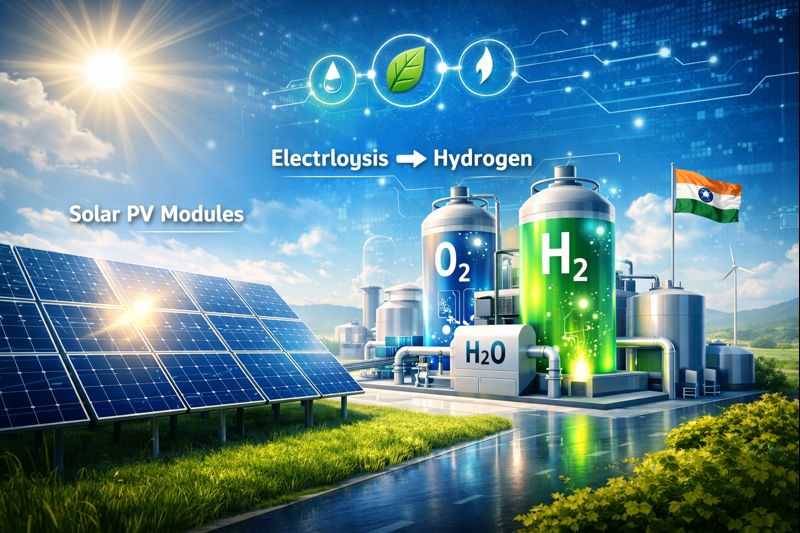
Electrolysis is the process where water (H₂O) is split into hydrogen (H₂) and oxygen (O₂) using electricity. Solar energy comes in as the power source. Here’s the simplified chain:
- Solar panels capture sunlight → convert it into electricity.
- Electricity feeds an electrolyser.
- Electrolyser splits water → hydrogen is collected for energy storage or fuel.
This process creates green hydrogen because it’s generated without fossil fuels.
Role of Solar PV Modules
High-efficiency solar panels are critical. More power per square meter means more hydrogen production. Reliable modules ensure uninterrupted electrolysis, which is key for industrial-scale hydrogen systems.
Are Hydrogen Solar Panels Commercially Available Today?
The honest answer: No.
- Research and pilot projects exist globally, but no solar panel manufacturer offers a product that directly produces hydrogen.
- Many innovations are still at laboratory or demonstration stage, often combining PV with electrolyser tech.
- Any claim of “buy a hydrogen solar panel today” is misleading.
This is why an educational approach is vital—inform users without promising products that don’t exist.
Solar vs Hydrogen – Competing or Complementary?
Solar and hydrogen aren’t competitors—they’re partners in the renewable ecosystem.
- Solar produces electricity → used for immediate power needs or stored as hydrogen.
- Hydrogen acts as energy storage, solving intermittency issues of solar PV.
- Together, they improve grid stability and energy reliability.
Think of it like this: solar panels are the chef cooking electricity, and hydrogen is the freezer storing it for later.
Role of High-Efficiency Solar Panels in Green Hydrogen
Here’s where Powersphere’s expertise comes in:
- N-Type TOPCon panels: High efficiency → more electricity for electrolysis.
- Reliability: Consistent power output ensures electrolysers operate optimally.
- Industrial readiness: Large-scale hydrogen projects need panels that can perform in real-world conditions.
High-quality PV modules are the foundation for any solar-hydrogen system. Without them, the efficiency drops, and hydrogen costs rise.
India’s Green Hydrogen Mission & Solar Energy
India is betting big on green hydrogen.
- Government initiatives aim to produce green hydrogen at scale.
- Solar-powered hydrogen is a natural fit due to India’s abundant sunlight.
- Reliable PV manufacturers like Powersphere will play a critical role in enabling future hydrogen infrastructure.
This positions Indian solar companies to be part of a global energy transition.
Powersphere’s Perspective on Hydrogen + Solar Future
While we don’t sell hydrogen solar panels, here’s Powersphere’s take:
- Focus on PV manufacturing excellence.
- Stay future-ready with R&D in new solar technologies.
- Support upcoming hydrogen-linked solar infrastructure.
- Educate stakeholders honestly about what’s possible now vs. in the future.
Transparency is key. Building trust today ensures relevance in tomorrow’s energy landscape.
Final Verdict – Are Hydrogen Solar Panels the Future?
- Today: Not commercially available.
- Tomorrow: Solar-powered hydrogen is a promising path for renewable energy storage.
- Key takeaway: Investing in high-efficiency solar panels now lays the groundwork for a green hydrogen economy later.
By focusing on quality PV manufacturing, companies like Powersphere are preparing for a hydrogen-integrated energy system without misleading customers.
FAQs
Not yet. The term usually refers to solar-powered hydrogen production systems, not standalone panels.
Indirectly, yes. Solar panels generate electricity that powers electrolysers to split water into hydrogen.
They complement each other. Solar is immediate electricity; hydrogen is a storage medium and fuel.
No. Solar PV will remain the primary electricity source; hydrogen serves as storage or fuel.
High-efficiency PV modules maximize hydrogen production, reduce costs, and ensure reliable industrial operations.